
DeFi
Decentralized Finance, a category of financial applications built on blockchain that provide services like lending, borrowing, and trading without traditional intermediaries.
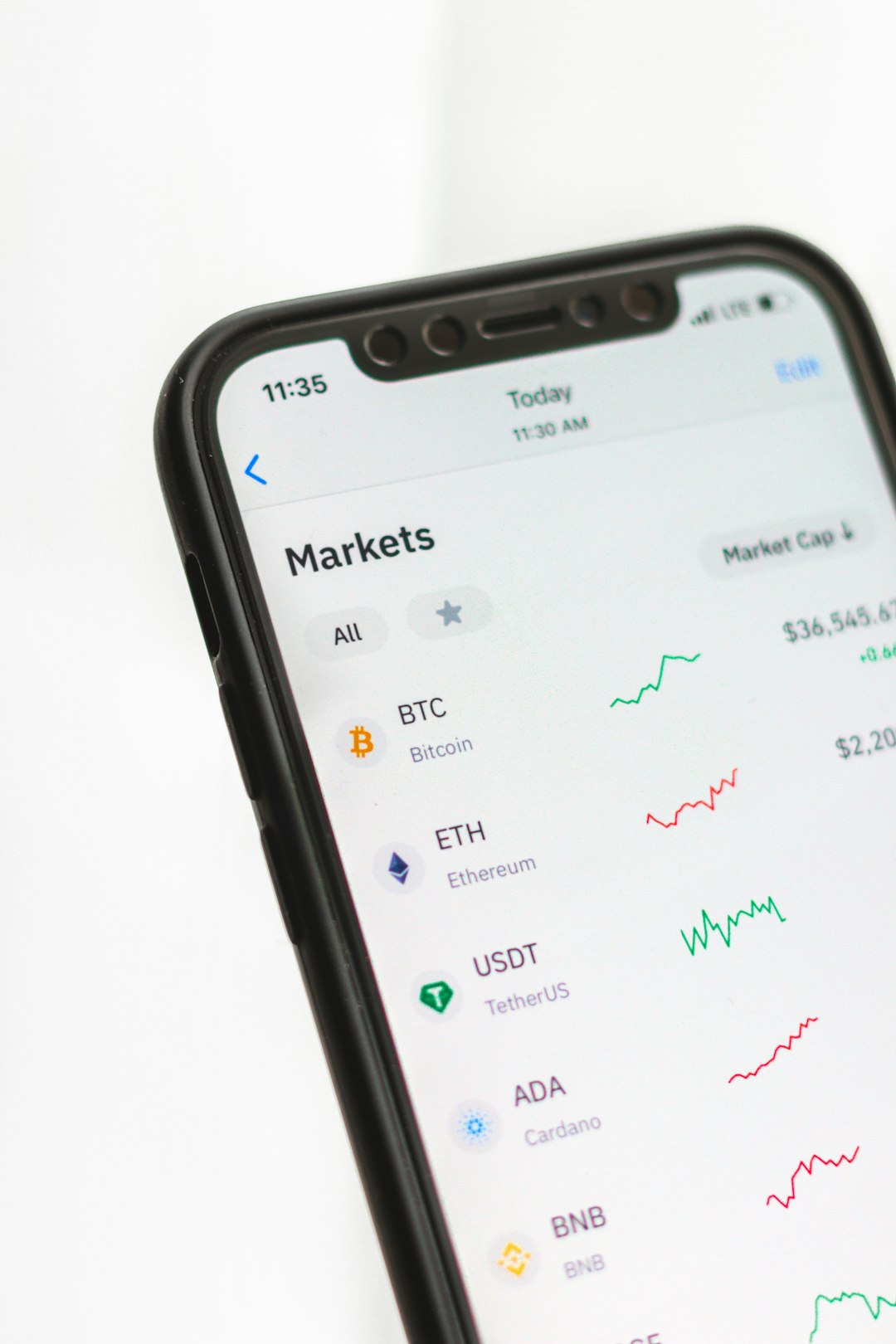
DeFi refers to a category of financial applications built on blockchain networks that enable services like lending, borrowing, trading, and earning interest without relying on traditional intermediaries such as banks or brokerages. These protocols use smart contracts to automate transactions and enforce rules transparently, allowing users worldwide to access financial services with just a cryptocurrency wallet. Aave, one of the largest DeFi lending protocols, exemplifies this approach by letting users deposit assets to earn yield or borrow against their holdings without credit checks or bank approval. DeFi encompasses decentralized exchanges, yield farming platforms, stablecoin systems, and insurance protocols, each offering alternatives to conventional finance. For job seekers, DeFi expertise is highly sought after, with roles spanning smart contract development, protocol security auditing, tokenomics design, and risk management across numerous active projects.
The DeFi Revolution
Traditional finance relies on institutions to enable transactions, hold assets, and enforce contracts. DeFi replaces these intermediaries with code running on public blockchains. This shift enables:
- 24/7 markets with no trading hours or settlement delays
- Permissionless access, with no credit checks or account approvals required
- Transparent operations where all transactions are publicly auditable
- Composability, allowing protocols to integrate and build on each other
Core DeFi Services
-
Lending and Borrowing: Protocols like Aave and Compound allow users to lend crypto assets to earn interest or borrow against collateral. Interest rates adjust algorithmically based on supply and demand.
-
Decentralized Exchanges (DEXs): Platforms like Uniswap and Curve enable peer-to-peer token trading without centralized order books. Automated Market Makers (AMMs) use liquidity pools to enable trades.
-
Stablecoins: Cryptocurrencies designed to maintain stable value, either backed by reserves (USDC) or algorithmically managed (DAI), provide a stable medium of exchange within DeFi.
-
Derivatives and Options: Protocols offer perpetual futures, options contracts, and synthetic assets, enabling sophisticated trading strategies without traditional brokers.
-
Yield Farming: Users can deploy capital across multiple protocols to maximize returns through lending, liquidity provision, and staking rewards.
How DeFi Works
At its core, DeFi operates through smart contracts that hold and manage assets according to programmed rules. When you deposit funds into a lending protocol, the smart contract:
- Records your deposit and issues you interest-bearing tokens
- Makes your funds available for others to borrow
- Algorithmically adjusts interest rates based on use
- Automatically calculates and distributes your earned interest
- Allows you to withdraw your funds plus interest at any time
All of this happens without human intervention, and the code is typically open-source and auditable.
Total Value Locked (TVL)
The DeFi ecosystem is measured by Total Value Locked, which is the amount of cryptocurrency deposited in protocols. Ethereum dominates DeFi, though alternative chains like Binance Smart Chain, Avalanche, and Solana host significant activity.
Risks and Considerations
-
Smart Contract Risk: Bugs in code can lead to exploits and loss of funds. Audits reduce but don't eliminate this risk.
-
Impermanent Loss: Liquidity providers can lose value compared to simply holding assets when prices diverge.
-
Regulatory Uncertainty: DeFi's decentralized nature creates ambiguity around securities laws and consumer protection.
-
Liquidation Risk: Borrowers using collateral can be liquidated if asset prices drop below required thresholds.
-
Oracle Dependence: Many protocols rely on price oracles, creating points of failure if oracle data is manipulated.
DeFi's Impact on Employment
DeFi has become a significant sector for Web3 job opportunities. Companies building DeFi protocols hire smart contract developers, quantitative analysts, security auditors, product managers, and economists. Understanding DeFi mechanisms, tokenomics, and protocol design has become essential for many blockchain careers.
Major DeFi Protocols
-
Uniswap: The leading decentralized exchange (DEX) using automated market makers (AMMs). Instead of order books, liquidity pools enable instant swaps. Users provide liquidity by depositing token pairs, earning fees from trades. Uniswap V3 introduced concentrated liquidity, allowing providers to specify price ranges for capital efficiency.
-
Aave: Leading money market protocol. Users deposit assets to earn interest, while borrowers provide collateral to take loans. Aave pioneered flash loans, which are uncollateralized loans that must be borrowed and repaid within one transaction. Developers use flash loans for arbitrage, liquidations, and collateral swapping.
-
MakerDAO: Issues DAI, a decentralized stablecoin backed by crypto collateral. Users lock ETH or other assets in vaults to mint DAI, maintaining over-collateralization ratios. If collateral value drops too much, liquidations occur to protect the system. MakerDAO's governance token (MKR) holders vote on risk parameters, interest rates, and collateral types.
-
Curve Finance: Optimized for stablecoin and similar-asset trading with minimal slippage. Curve's specialized AMM algorithm keeps prices stable for assets that should trade at parity. The protocol dominates stablecoin liquidity.
-
Compound: Lending protocol where interest rates adjust algorithmically based on supply and demand. Compound popularized yield farming by distributing COMP governance tokens to users.
-
Lido: Liquid staking protocol allowing users to stake ETH while maintaining liquidity. Instead of locking ETH, users receive stETH tokens representing staked ETH, usable throughout DeFi for borrowing and liquidity provision.
Composability: DeFi's Superpower
DeFi protocols function as composable building blocks. A user might:
- Deposit ETH into Lido, receiving stETH
- Use stETH as collateral on Aave to borrow USDC
- Swap USDC for DAI on Curve
- Provide DAI liquidity on Uniswap, earning fees
- Stake Uniswap LP tokens in a yield farming protocol
This composability enables complex financial strategies that are not possible in traditional finance, but also creates systemic risks when protocols interconnect.
Flash Loans: DeFi's Innovation
Flash loans enable borrowing any amount without collateral, provided the loan is repaid within the same transaction block. If repayment fails, the entire transaction reverts as if nothing happened.
Use cases include:
- Arbitrage: Borrow funds to exploit price differences across exchanges
- Collateral Swapping: Change loan collateral without closing positions
- Liquidations: Liquidate undercollateralized positions profitably
However, flash loans also enable attacks. Malicious actors have used them to manipulate oracle prices and drain protocols.
Impermanent Loss Explained
Liquidity providers face impermanent loss when token prices diverge. If you provide ETH/USDC liquidity at $2,000 ETH and ETH rises to $4,000, you'd have been better off holding ETH.
Example: Deposit 1 ETH + 2,000 USDC (total $4,000 value)
- ETH doubles to $4,000
- The AMM rebalances: you now have ~0.707 ETH + 2,828 USDC
- Simply holding: 1 ETH + 2,000 USDC = $6,000
- Impermanent loss: $344
The "loss" is impermanent because it only realizes when withdrawing. Trading fees aim to offset this risk. Highly volatile pairs experience greater impermanent loss.
DeFi Risks
-
Smart Contract Vulnerabilities: Despite audits, exploits occur regularly. Various incidents demonstrate persistent security challenges.
-
Liquidation Cascades: In volatile markets with network congestion, collateral value can drop faster than users can react, causing mass liquidations that compound price declines.
-
Oracle Manipulation: DeFi relies on price oracles for external data. Flash loan attacks often manipulate on-chain price oracles to exploit protocols.
-
Regulatory Uncertainty: Governments scrutinize DeFi's role in money laundering, tax evasion, and securities law. The decentralized nature creates regulatory challenges.
-
Rug Pulls: Malicious developers can create protocols with backdoors to drain funds. Due diligence on protocol teams, audits, and time locks is essential.
Yield Farming and Sustainable Yields
Projects distribute governance tokens to users providing liquidity, known as yield farming. This incentivizes growth but can create unsustainable dynamics. When token rewards decrease, liquidity often disappears.
APY (Annual Percentage Yield) in DeFi fluctuates dramatically. Sustainable yields come from:
- Trading fees (DEXes)
- Interest spread (lending protocols)
- Protocol revenue sharing
Unsustainable yields depend on token emissions that cannot continue indefinitely. High APYs usually signal high risk or temporary incentives.
DeFi vs Traditional Finance
-
DeFi Advantages:
- 24/7 global markets
- Permissionless access
- Transparency and auditability
- Programmable money
- No minimum balances or fees for account maintenance
-
Traditional Finance Advantages:
- Deposit insurance
- Legal recourse for fraud
- Customer support
- Regulatory oversight
- Simpler user experience
Traditional banks might offer low savings interest while DeFi lending provides higher rates, but DeFi carries smart contract and protocol risks that bank deposits do not.
Career Opportunities in DeFi
-
Smart Contract Developer: Building lending protocols, DEXes, and derivatives platforms. Requires Solidity expertise and financial knowledge.
-
Smart Contract Auditor: Reviewing code for vulnerabilities. Firms pay premium salaries.
-
DeFi Protocol Designer: Creating economic models, tokenomics, and mechanism design. Combines game theory, economics, and blockchain.
-
Quantitative Researcher: Analyzing yield strategies, risk models, and arbitrage opportunities. Quantitative finance background is highly valued.
-
DeFi Analyst: Monitoring protocols, analyzing TVL, tracking ecosystem trends. Entry point into DeFi careers.
-
Protocol Economist: Designing token economics and incentive mechanisms. Academic economics background is valuable.
The sector continues evolving with real-world asset tokenization, decentralized identity, institutional DeFi adoption, and cross-chain protocols, creating new specialized roles continuously.